
 FR
FR  ES
ES  CAT
CAT 
Walnut cutting boards: types, formats and featured models
Discover our collection of walnut cutting boards and why walnut is one of the most valued woods for kitchen boards: deep dark tones, high durability and dimensional stability.
Why choose a walnut cutting board?
Walnut wood (Juglans regia and Juglans Nigra) is prized for its dark hue, fine grain, and dimensional stability, making it one of the most commonly used in cutting boards, butcher blocks, and fine joinery in general.
It has high resistance to shocks and moisture, easy finishing, and natural elegant finish, making it ideal for home or professional use.
Our walnut cutting boards
-
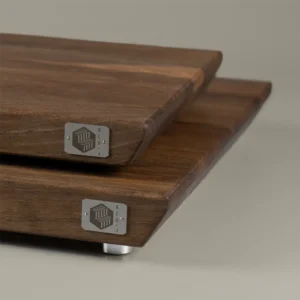
Linea
Walnutwalnut board to grain
Price range: 75,00 € through 350,00 € (Iva Incluido) -
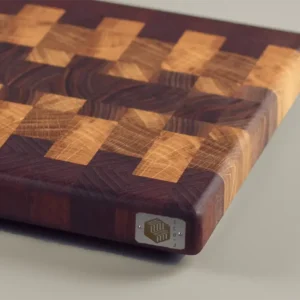 Calida
end grain cutting board
Price range: 150,00 € through 325,00 € (Iva Incluido) -
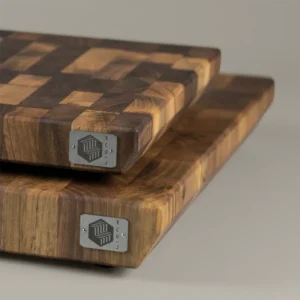
Pure
WalnutWalnut cutting board
Price range: 130,00 € through 515,00 € (Iva Incluido)
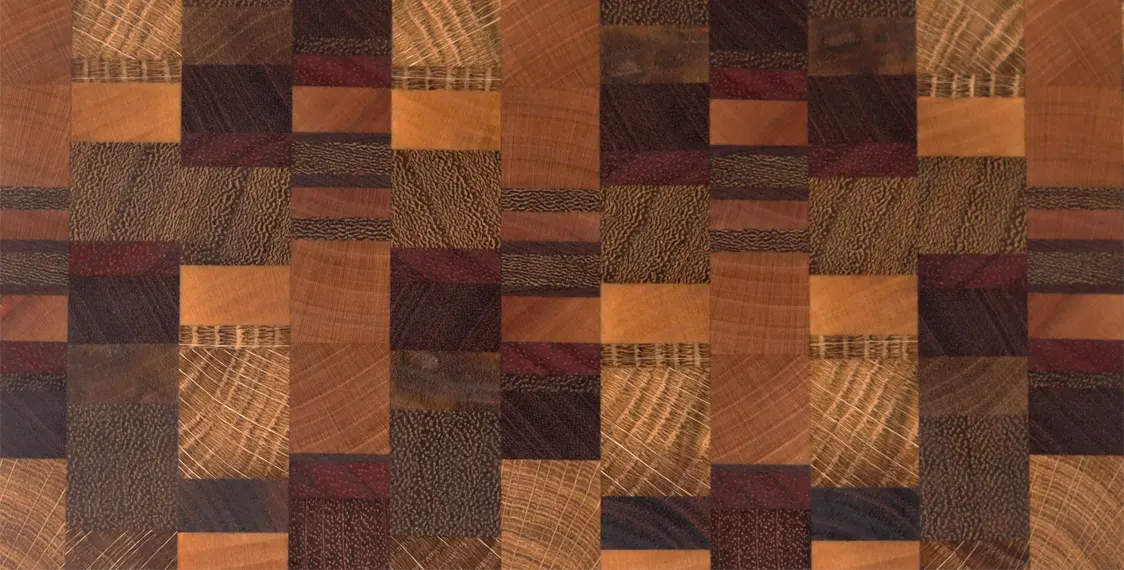
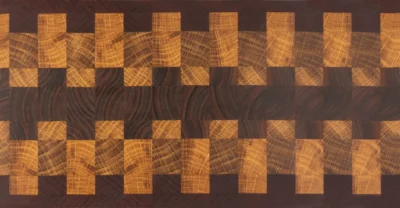
1. CALIDA – Designer walnut cutting board (end grain)
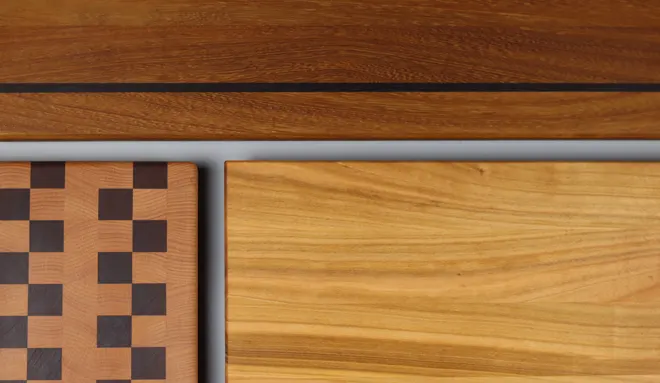
Elegant premium end cutting board made with walnut, oak and sapelly wood in a contrasting geometric pattern.
Our walnut cutting board CALIDA is available in our permanent collection in two standard sizes S (30x20x3) and M (40x30x4). For other sizes customizer contact here
2. Linea Walnut – Single-color vein board
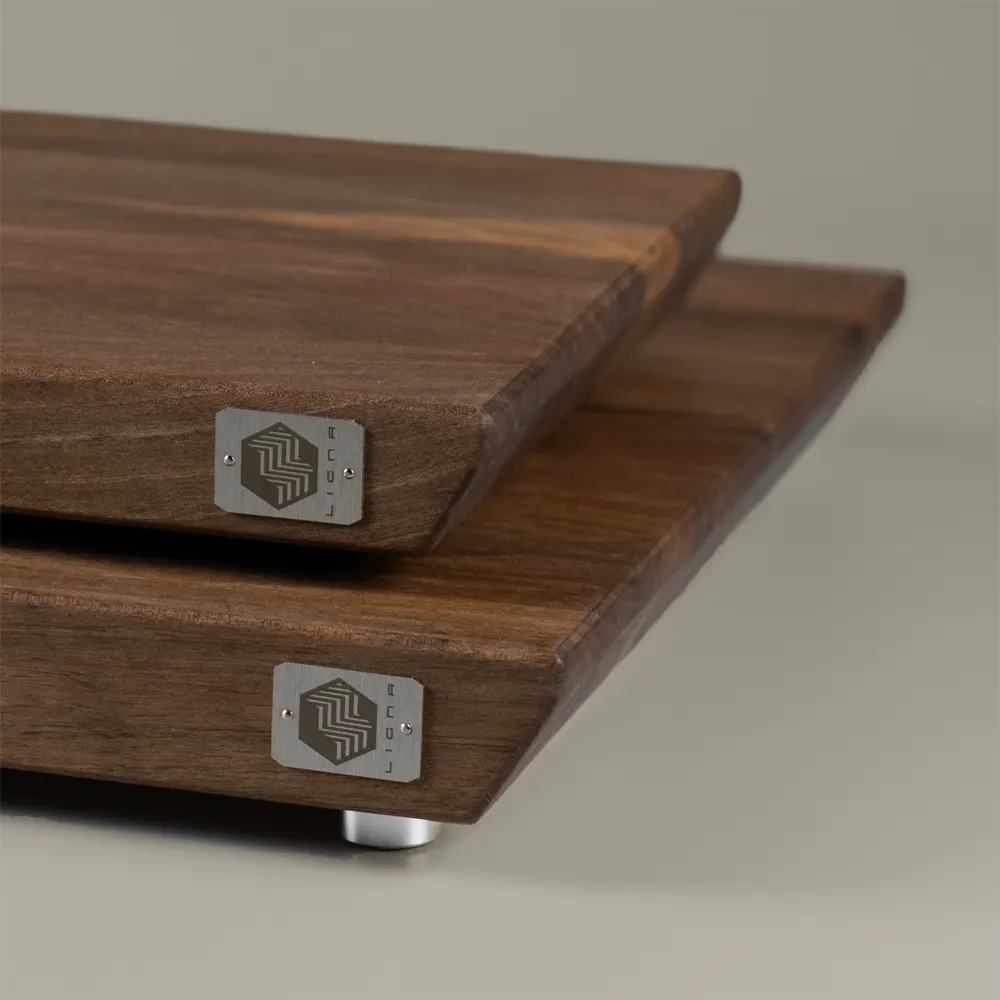
Linea walnut is our walnut kitchen board from the Essentia collection. Functional and minimalist model that highlights the natural veins of walnut.
Made with European or American walnut depending on the stock or customer requirements. Available in three standard sizes: S (30x20x3) M (40x30x3.5) and L (50x40x4.
3. Fortis – Small Cutting Board
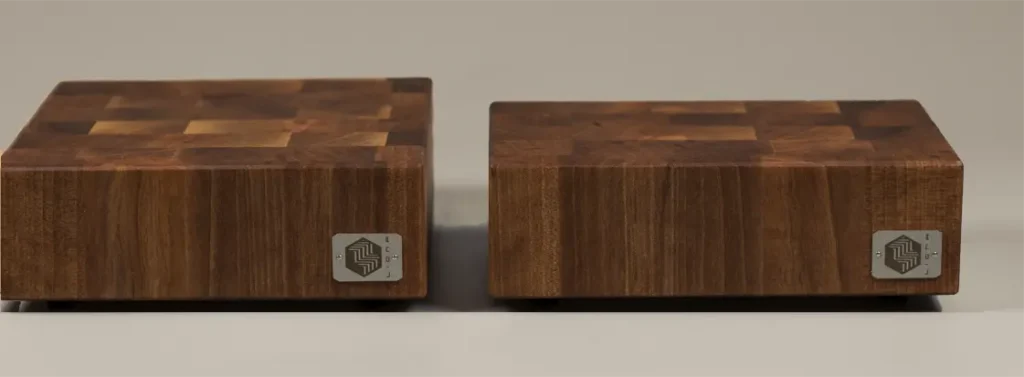
Designed for small kitchens, travellers or as a presentation board for gourmet food, the Fortis walnut cutting board stands out for its height (5.5cm) and presence.
Constructed in end grain, it provides a smooth surface for cutting, durable and visually distinctive. Perfect for versatile use and gourmet presentations.
Available in square (19x19x5.5cm) and elongated (19x12x5.5cm) formats in hard maple and walnut woods.
4. Pura Walnut – Elegance and functionality in a single board
Pura Walnut is our walnut cutting board at the end of the Essentia collection. Its deep dark tones have made it our most demanded cutting board, ideal for demanding cooks.
It combines sophisticated aesthetics with maximum functionality: high dimensional stability, surface friendly with high-end knives and resistant to daily use. A timeless classic for your kitchen.
Available in three sizes: S (30x20x3cm), M (40x30x4cm) and L (50x30x5cm). Other sizes on request.
Walnut cutting boards: End Grain vs face grain: which one to choose?
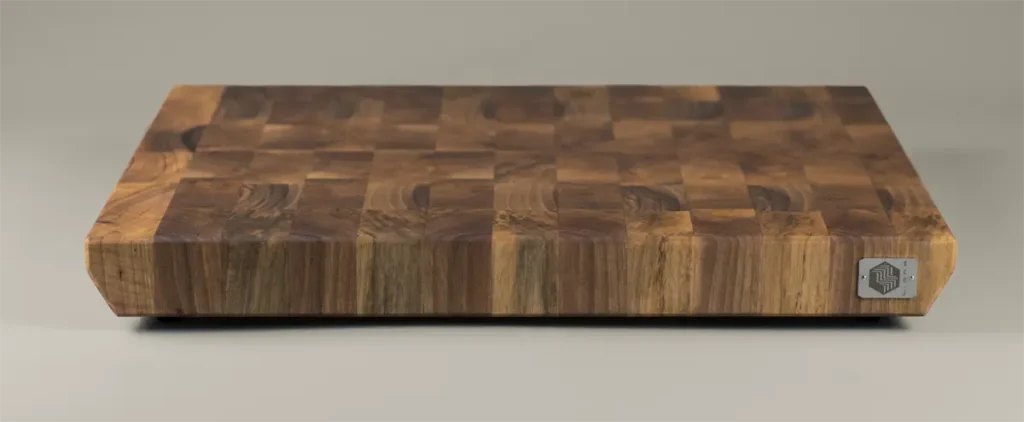
- End Grain Cutting Board: In end grain boards the grain of the wood is presented vertically, which protects the edge of the knife and provides greater resistance to daily wear since the fibers of the wood are not cut with the knife, but separated.
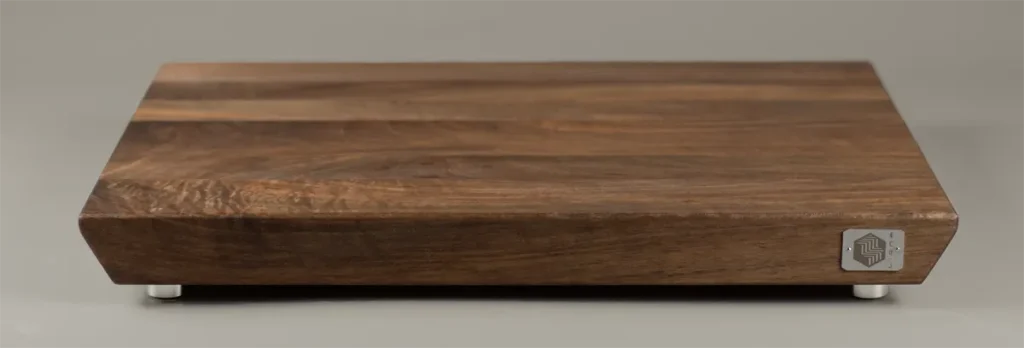
- Grain (Walnut Line): exhibits the natural grain of the wood throughout the surface. Knives wear out more quickly and mark the wood more. Their construction process is simpler, so they are cheaper.
Types of Walnut: Key Differences
– European or Spanish Walnut (Juglans regia)
Medium to golden brown color, elegant and moderate veins. Sapwood is much lighter in color than heartwood, but it is equally usable. Fine texture, easy to work and polish. One of the most expensive woods commonly used.
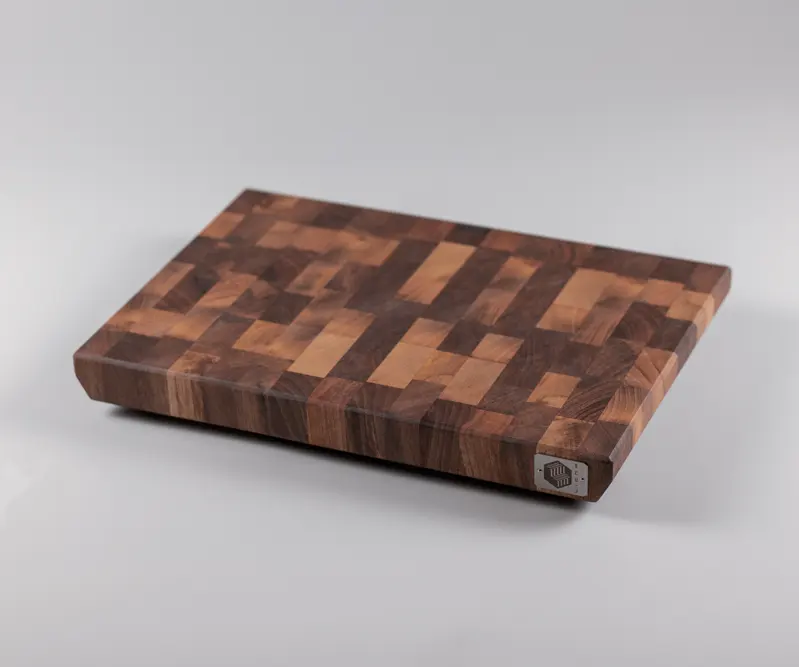
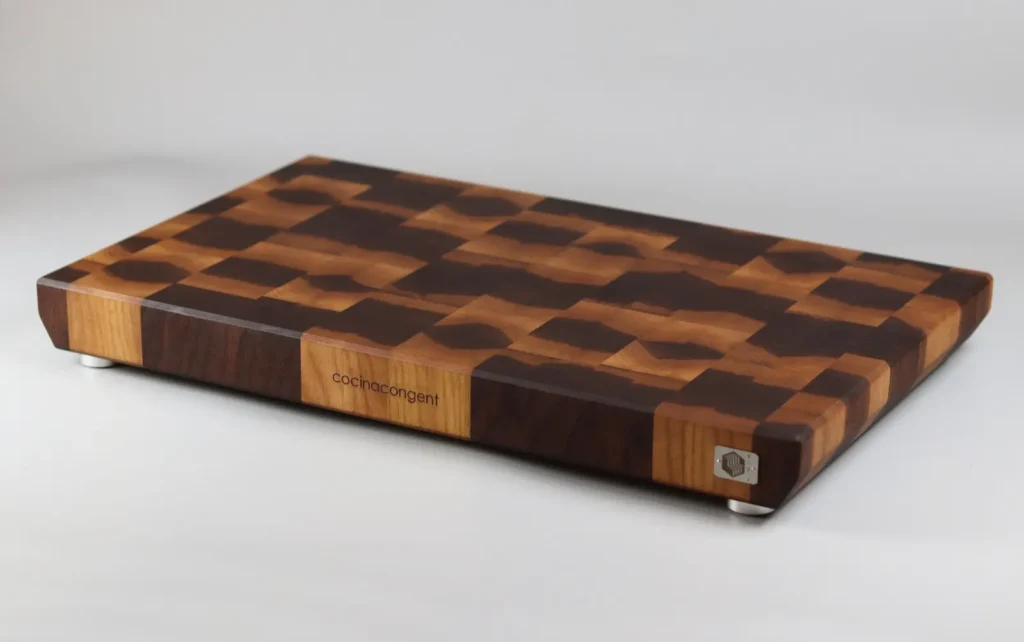
– American Black Walnut (Juglans nigra)
Shades of dark brown or chocolate with marked veins. Wood less dense than European walnut, but just as durable and highly resistant. American walnut is more commonly used than European walnut for walnut cutting boards.
Extras on our cutting boards
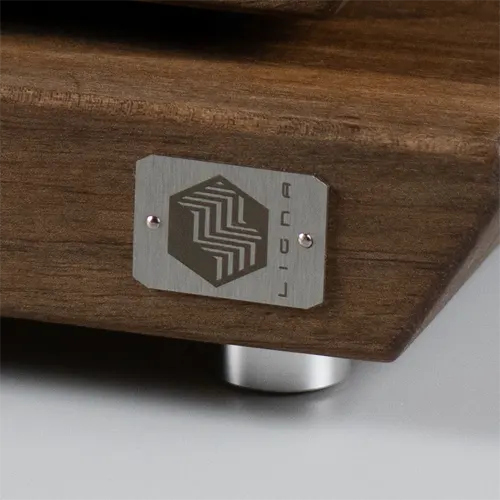
Premium non-slip feet
We offer premium non-slip legs in aluminum that improve the stability of the board as well as offering an aesthetic improvement over basic non-slip feet.
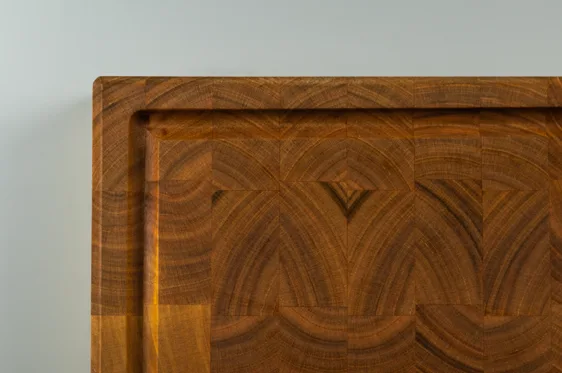
Juice slot
We offer juice slots on our M and L models on demand. This groove allows the retention of liquids derived from the handling and processing of wet foods such as meat, fish, etc.
Comparison of featured models
| Table | Fiber direction | Type of walnut | Size Range | Ideal for |
|---|---|---|---|---|
| Pure Walnut | Head | Black or European | S, M and L | Intensive use |
| Walnut Line | vein | Black or European | S, M and L | Medium and Food Presentation Use |
| Warm | Head | European | S, M | Intensive use |
| Fortis | Head | Black or European | Pequeña | Intensive use and to present food |
FAQ: Frequently Asked Questions
What is the difference between European walnut and American walnut?
European walnut (Juglans regia) offers smooth grains, lower density, and golden chocolate tones, while American walnut (Juglans nigra) provides marked grains, higher density, and deep dark hues. Although both share stability and aesthetics, the American shines in durability and visual contrast. Learn more about walnut characteristics at Wood Database
Why choose a walnut board over other woods?
Walnut wood combines resistance, stability in temperature changes and natural aesthetics. Its closed grain improves hygiene, its hardness withstands daily use and its natural finish easily accepts oils and varnishes.
What advantages does the use of testa vs veta offer?
End boards better protect the knife edges and offer greater durability to constant use, while grain boards are used for their attractive visual finish and grain symmetry.
What size board do I recommend based on usage?
For specialized home use, the 30–40 cm boards are practical. For chefs or presentations, 40–50 cm models provide greater comfort and workspace. The small (
How should walnut cutting boards be maintained?
Clean it with warm water and mild soap, dry it thoroughly. Apply mineral or natural oil before the first use and periodically, and avoid soaking it for long periods. Check for possible cracks and store in a ventilated place.
Are walnut cutting boards hygienic?
Yes. Its closed grain and final treatment make it difficult to retain moisture or bacteria. Immediate drying after washing and oil maintenance is recommended to maximize its hygiene and durability. Learn more in this scientific article on hygiene on wooden cutting boards
Can they shrink or deform in moisture?
Walnut wood has good dimensional stability, but sudden changes in humidity can cause deformations. Regular drying and maintenance reduce this risk considerably. They cannot be washed in the dishwasher. The USDA recommends immediately drying wooden boards after washing.
Is each piece unique in tones and veins?
Yes. Each slab shows natural variations in color and grain pattern, making each piece unique in appearance and visual character so even the slabs in the basic collection will always be unique.
Can I use these boards with raw meat or vegetables?
Yes, its surface is resistant and easy to wash. It is important to dry them and apply oil. The genus Juglans, due to its density, resists bacteria better than other softwoods.
What is the price difference between the Pura and Linea models?
Pura Nogal (end cut) usually has a higher price for greater resistance and for having a more elaborate construction process. Walnut Line (grain) is a simpler board, so its price is lower and it uses practically the same amount of wood.
Otras entradas del blog

Suar wood: uses and characteristics
What are hardwoods?
Restaurant serving boards: a complete guide
Wooden Sushi Boards: A Complete Guide to Authentic and Elegant Presentation
Nuestras tablas de cortar:
Pura
Maple hard maple end grain cutting board
Pura
Maplehard maple end grain cutting board
Chroma
large carving board
UMBRA
serving board
NUBILA
wooden cheese board
